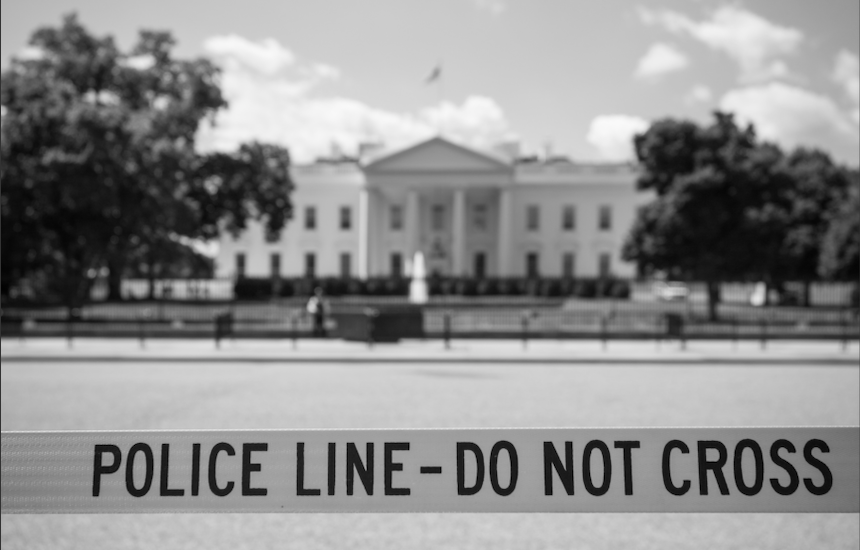
It has been seven years from the Benghazi attack. In episode seven, examine the state of American interest in the attack and foreign policy in Libya today.
The state of Libya today is a fragile government administration currently under attack by “military strongman Khalifa Haftar,” and the United States is in the third year of the Donald J. Trump administration, with the next federal elections in 2020 (Wintour, 2019). Haftar is currently leading the Libyan National Army (LNA) in opposition of the UN backed “Government of National Accord” in Tripoli (Wintour, 2019).
So far during the fighting, the U.S. and Russia have blocked UN Security Council attempts to pass a ceasefire resolution. France, Russia, the United Arab Emirates and Egypt all support Haftar. The UN supported Prime Minister of Libya in Tripoli, Fayez al-Sarraj, is supported by Qatar, Italy and Turkey (Wintour, 2019). According to the Global Conflict Tracker by the Council on Foreign Relations however, the civil war in Libya has a “limited” impact on U.S. interests (“Civil War,” 2019). During the Obama administration, the U.S. had a foreign policy of “leading from behind” and backing Tripoli through diplomacy and occasionally with counterterrorism strikes, in 2016 (Seger, 2018).
To Sarraj supporters, Haftar is making a power grab, buoyed by foreign support (“Libyan Forces,” 2019). To Haftar supporters, he is fighting against corruption and an inefficient Tripoli government. The current fighting has driven away 30,000 residents, but has not yet “affected oil exports” (“Libyan Forces,” 2019). President Trump appears to support Haftar, calling him on April 15 to support his “vision for Libya’s transition to a stable, democratic political system” (Aftandilian, 2019). One week before, U.S. Secretary of State Mike Pompeo stated that the Trump administration was against Haftar. Now, the President opposes the UN drafted ceasefire alongside Russia.
Another side to this story is that after an oil embargo on Iran exports, the shortfall would need to come from another country, and Libya has strong oil reserves and under Haftar could increase production (Aftandilian, 2019).
Today, there is low interest in Benghazi events in general. Although during the 2013 coverage Americans “paid limited attention to last week’s congressional hearings on Benghazi,” they are “deeply split” in their opinions on the federal government’s handling of the investigation (“Benghazi Investigation,” 2017). The also data show a partisan divide and a preference on the Republican side, as compared to Democrats or Independents, for more media coverage of the investigation. Americans today are more concerned about the economy, jobs and tax law, as well as terrorism and immigration (Bialik, 2018).
The U.S. is pivoting today to direct its competition to China, a country that also is aiming for economic superpower status. Before renewed interest in North Africa and the Middle East, the Obama administration began to view China as a threat (Traub 2012).

Boghani, Priyanka. “What Will Interventions Look Like After Libya?” FRONTLINE, PBS, 3 May 2016. www.pbs.org/wgbh/frontline/article/what-will-interventions-look-like-after-libya/. Accessed 29 Apr. 2019.
“Regional Disorder: The Middle East.” Great Decisions, Foreign Policy Association, 28 Dec. 2018, www.greatdecisions.tv/regional-disorder-the-middle-east/. Accessed 29 Apr. 2019.

Aftandilian, Gregory. “Deciphering Trump’s Surprising Stance on Libya.” The Arab Weekly, 28 Apr. 2019. thearabweekly.com/deciphering-trumps-surprising-stance-libya. Accessed 29 Apr. 2019.
“Benghazi Investigation Does Not Reignite Broad Public Interest.” Pew Research Center, 13 May 2013. www.people-press.org/2013/05/13/benghazi-investigation-does-not-reignite-broad-public-interest/. Accessed 27 Feb. 2018.
Bialik, Kristen. “State of the Union 2018: Americans’ Views on Key Issues Facing the Nation.” Pew Research Center, 29 Jan. 2018. www.pewresearch.org/fact-tank/2018/01/29/state-of-the-union-2018-americans-views-on-key-issues-facing-the-nation/. Accessed 12 Apr. 2019.
“Civil War in Libya.” Global Conflict Tracker, Council on Foreign Relations, 29 Apr. 2019. www.cfr.org/interactive/global-conflict-tracker/conflict/civil-war-libya. Accessed 29 Apr. 2019.
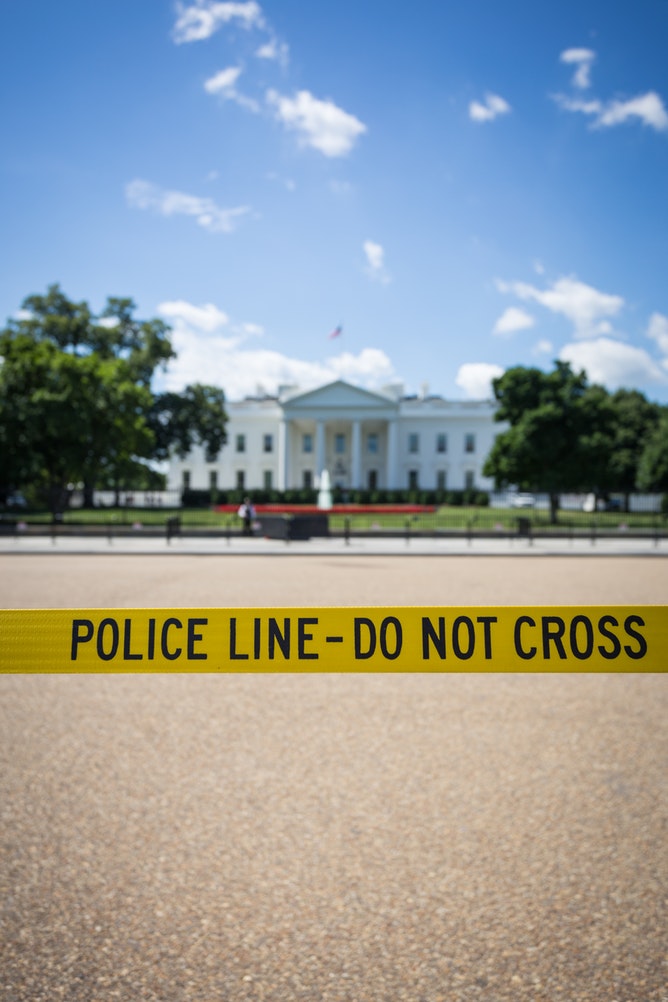
Morch, Jacob. “The White House and Yellow Do Not Cross Tape.” Unsplash, 31 Aug. 2017. unsplash.com/photos/T0_zDzxYvRM. Accessed 10 Apr. 2019.
“Libyan Forces Push Back Against Haftar in House-to-House Battles.” Reuters, Thomson Reuters, 28 Apr. 2019. www.reuters.com/article/us-libya-security/libyan-forces-push-back-against-haftar-in-house-to-house-battles-idUSKCN1S40Q8. Accessed 29 Apr. 2019.
Seger, Andrew. Interview with Frederic Wehry. “Can Libya’s Divisions Be Healed?” Council on Foreign Relations, 15 Aug, 2018, www.cfr.org/interview/can-libyas-divisions-be-healed. Accessed 29 Apr. 2019.
Wintour, Patrick. “Libyan Strongman Khalifa Haftar is No Democrat – UN Envoy.” The Guardian, Guardian News & Media Ltd., 29 Apr. 2019. www.theguardian.com/world/2019/apr/29/libyan-strongman-khalifa-haftar-is-no-democrat-un-envoy. Accessed 29 Apr. 2019.