Prior to traveling to China, I wrote about China from cultural, economic and political perspectives. The GBL 200: China’s Economy Today course brought together students from several disciplines, and when writing assignments we integrated our own unique sources of knowledge. Though GBL 200 focused on economic themes, economics is made from analysis of several subjects, and as an International Relations major, I like to ask questions of nations through the lens of future leaders. I was able to apply my political science reserach ability, personal travel experiences and lamguage studies to write this paper. As you can see from the end of this paper, though the economics aspect was interesting, when going there in person, I was most curious about the students we would meet and connections to be made.
China as a Global Leader
China’s economy has grown through a combination of state government led planning, through its “political economy,” and dedicated investment into areas such as its education and university system, and its manufacturing infrastructure (Kroeber, 2016; Beard, 2018). Through the Global 200: China’s Economy Today course, I have learned what has driven China’s rapid economic growth since 1979, when its reforms began, and what industries China’s growth model is transitioning to as a modern economy (Kroeber, 2016). Today, China has many opportunities to enhance its standing as an emerging superpower, but it also faces challenges in achieving that goal (Huang, 2017).
My presentations in class focused on China’s education system and perceptions of Chinese cuisine throughout the regions we will visit, as compared to American-Chinese food. With both presentations, I grappled with the topics by comparing them to what I know about America’s economic state and the Americanization of food, respectively. Although I have never taken an economics class while at Agnes Scott, by listening to my classmates, majoring and therefore well-versed in Economics and Business Management, present on what they know, I discovered that studying an economy involves factors I already know. By reading China’s Economy: What Everyone Needs to Know, I discovered how deeply economics is impacted by history and shapes culture, and could follow a narrative from China’s early reforms to the policies it applies and challenges it faces today.
China has gone through several phases of government and policy. From the 1970s and 1980s, the country experienced a reform period, which allowed for some private businesses and agricultural production to increase (Kroeber, 2016). Throughout the 1990s, China began a series of investment projects, targeting infrastructure and using the accumulated social capital, which unequally favored an economic elite (Pettis, 2014). According to some experts, the phase China is in now is “unsustainable,” because while rapid investment increases appear to be physical indicators of rapid economic growth, it does not increase productivity and debt levels are also rising (Pettis, 2014). Additionally, not all of China has risen together, although average incomes have increased. Despite general income inequality, people in China believe unequal outcomes are acceptable to in order to better one’s own lot (Kroeber, 2016). However despite these possible drawbacks, China has indisputably been able to expand its global economic presence and become the world’s top exporter, and the number one destination of those exports is the United States (“China”).
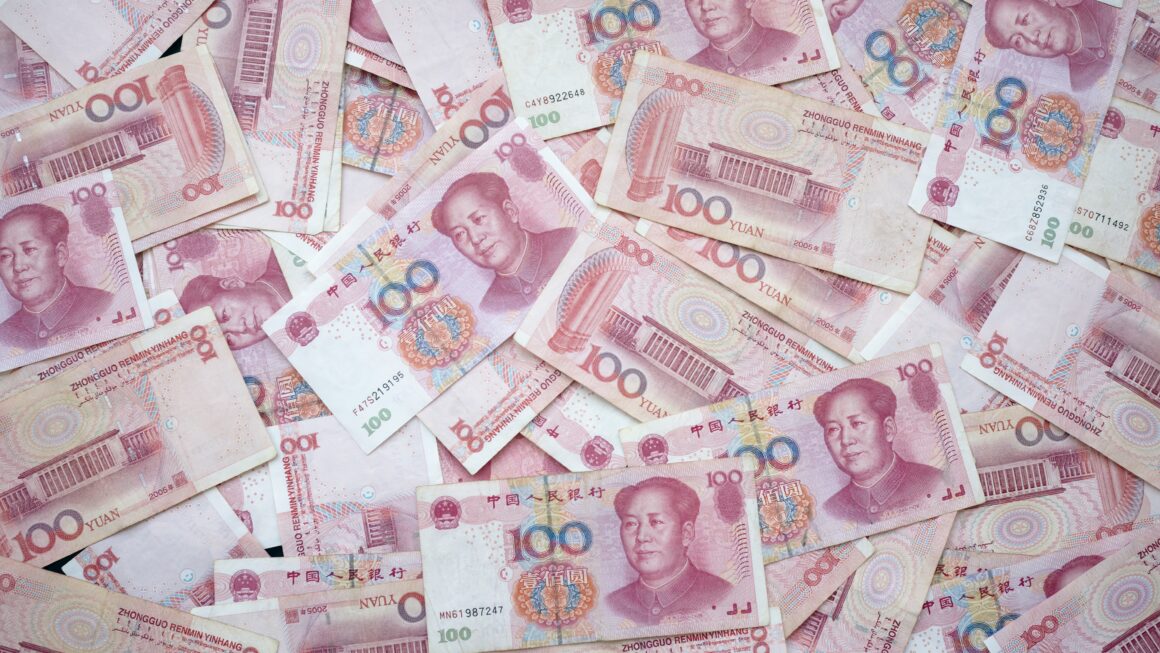
China as a global actor has increased its economic strength by focusing on two main strategies, transitioning from the “Communist command economy” and adopting the “East Asian developmental model” (Kroeber, 2016). The ‘East Asian model’ continuously adapts policies to move resources from the state to the private sector while continue to control the financial system. The first drivers of China’s growth were “capital spending on basic industries, export-oriented factories, infrastructure, and housing,” but now China is transitioning from industrialization to more entrepreneurial services and technology driven products (Kroeber, 2016). To some in the U.S., China appears to be a threatening force because of job market losses as American businesses relocated manufacturing there (and it may be considered as a military threat in the contested South China Sea, despite claims that it is not militarized expansion), but the real threat may come from an economic slowdown. According to some analysts, “China has actually managed to avoid a recession for 25 years now,” and this has only been possible by the central government directing credit amounts and bank lending (O’Brien, 2019).
Nevertheless, China is clearly and economic powerhouse, if not a superpower, and because so much of the U.S.’s economy relies on China’s participation, its important in American interests that China’s economy is strong. Another parallel between the U.S. and China is how a consumer market has developed in China through globalization, especially among the urban elite and growing middle class (Kroeber, 2016). Previously, China did not turn investment into spending because of heavy industry, as it did not make enough “productivity” for wage growth (Kroeber, 2016). Growth has been “unbalanced,” because it has focused on high investment in industries, factories and infrastructure, through high capital spending high, leading to unequal incomes (Kroeber, 2016). Although this pattern follows the successful (especially for Japan, South Korea and Taiwan) ‘East Asian model,’ it is possible and probable that after China has installed this fixed capital, consumer spending will continue its economic growth and increase its status.
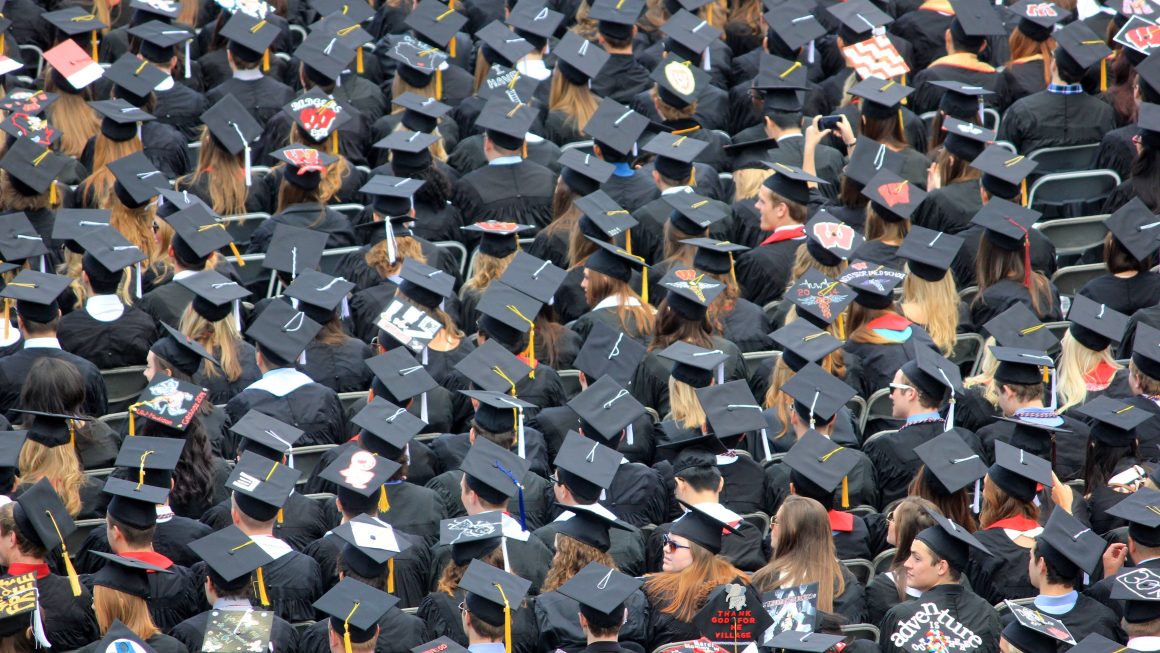
Another way that globalization has impacted China, is through its large numbers of tourists and students, that go abroad each year. This trend has been made possible by the emerging urban, middle class, who drive the growing consumer market (Kroeber, 2016). China, alongside the U.S., is the largest producer of study abroad, or international students (Velarde, 2019). China does have a defined goal of becoming an education superpower, and from my research, it will likely be streamlined into the industries and careers transitioning away from heavy industry, focusing on entrepreneurship and international business.
When we travel to China in a week and a half, I want to speak to university students to understand how they view themselves in the world, and why they chose their degrees. I think economics is a major reason for why students choose their degrees, and I want to know whether Chinese students agree. Over the next twenty years, as we transition from students to workers, the link between sustainability and economics will be crucial to navigating the world, and understanding how the processes of globalization has impacted the environment. I am also excited to see if, after having been to China, studying Mandarin or economics as a minor is something I want to do at Agnes Scott, and if Chinese students seek sustainable initiatives. Additionally, I hope that the trip will stretch me to consider more than the Western perspective I have always lived in, and that I will understand what the growth of the Chinese economy means for the rest of the world through the best source available: the young people who study and live there.
Works Cited:
Beard, Alex. “China’s children are its secret weapon in the global AI arms race.” Wired. 19 April 2018. www.wired.co.uk/article/china-artificial-intelligence-education-superpower.
“China.” The Observatory of Economic Complexity, The MIT Media Lab. oec.world/en/profile/country/chn/.
Huang, Yanzhong. “China’s Superpower Status Not Enough to Replace U.S. as Global Leader (Yet).” Forbes, 29 Aug. 2017. www.forbes.com/sites/yanzhonghuang/2017/08/29/chinas-superpower-status-not-enough-to-replace-u-s-as-global-leader-yet/#2eef664af1b0.
Kroeber, Arthur R. “China’s Economy: What Everyone Needs to Know.” Oxford University Press, 1 Mar. 2016.
Pettis, Michael. “The Four Stages of Chinese Growth.” Carnegie Endowment for International Peace. 18 June 2014. carnegieendowment.org/chinafinancialmarkets/55947.
O’Brien, Matt. “China’s Slowdown is the Biggest Threat to World Economy.” The Washington Post, 9 Jan. 2019. www.washingtonpost.com/business/2019/01/09/chinas-slowdown-is-biggest-threat-world-economy/?utm_term=.44347989ba2b.
Velarde, Bethany. “Economics and Education in China.” Agnes Scott College, Decatur, GA. 24 Apr. 2019.