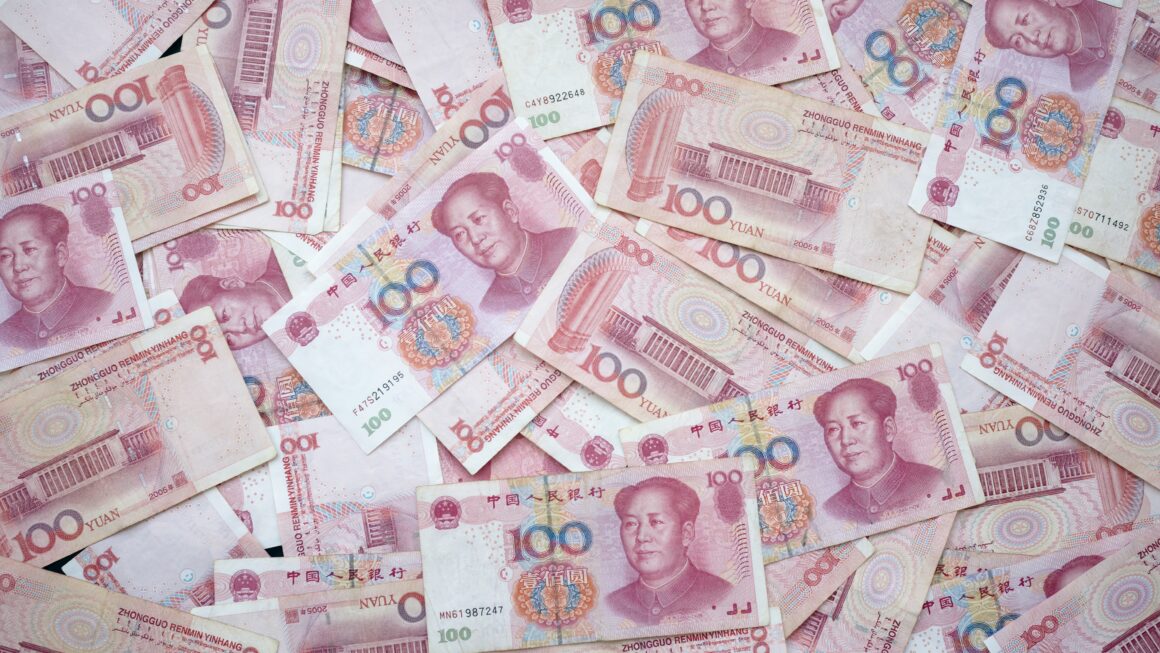
In the second semester of my second year, I was in my penultimate course for my International Relations major, POL 326: Approaches to International Relations. We had studied realism, liberalism, green theory, feminist theory and how research about IR is carried out. Our final project was a research paper applying a theory to a case study. In spring 2020, having traveled to China the year before, I was curious about the American-Chinese economic interdependency. What follows is my paper as I turned it in, about the trade war between the U.S. and China.
The Latest ‘War on Terror:’ The China-United States Trade War
- An Introduction to the China-U.S. Relationship
Postcolonial means “after invasion” and it includes not only destruction, but adaptation, change, and innovation (Zhang 3). The People’s Republic of China today is a hub of regional adaptation and economic expansion, a title that the United States of America has long occupied in the West throughout the 20th century. Together, the U.S. and China share a complex and interdependent relationship with its strongest roots in trade. This relationship is important for International Relations scholars to examine because both countries’ actions are influenced by their imperialist goals, which can be seen through the lens of postcolonialism. Both countries seek secured global status, achieved through an array of political and social tools. From regional diplomatic strategies (like the Belt and Road initiative) and authoritarian domestic control, as General Secretary Xi Jinping utilizes (Kroeber 229), to gauche Twitter politicking and media manipulation (Dobkiewicz), which U.S. President Donald J. Trump prefers, the two nations are at once rivals and partners in international economic and political influence. Decisions made by these two power players sway global markets, from international corporations, to stockbrokers, to agricultural laborers, to individual consumers. The focus of this analysis is to examine Trump’s ongoing ‘trade war’ through the lens of postcolonial theory, with a prediction of its future status based on the current impacts of the novel coronavirus pandemic. It is critical to examine Trump’s trade war, its causes, course, and effects, because it effectively summarizes the new American status quo of a Trumpian approach to International Relations. “Authority,” as Edward Said stated in Orientalism, “can, indeed must, be analyzed” (Said 20) especially where it patronizes all others. At once impactful and impotent, Trump’s influence in the American economic and political relationship with China’s Communist Party is a result of perennial imperial ambitions by the U.S. in reaction to China’s own ready ambitions. Following in the footsteps of his presidential predecessors, Trump has begun his own endless, unprepared and propaganda-driven ‘War on Terror,’ finding a readymade target in China.
- A Tale of Two Postcolonial Empires
The United States has long been a postcolonial empire, derived from the remnants of European colonialism. As the antecedent of postcolonialism, European colonialism involved control of land, resources, economies, and more, in conquest and invasion of the Americas, Africa, Asia and Oceania. Its descendant, postcolonialism “contests rationalist, humanist, and other universalist views” predicated in European imperialism (Zhang 3). According to postcolonial scholar Bill Ashcroft, this theory’s “analysis remains relevant… as classical imperialism continues the function of economic dominance through global capitalism” (Zhang 3). China and the U.S. are both global powers, and as previously stated, employ their power through attempts at economic, cultural and political dominance.
Applying postcolonial interpretation of China is a useful comparison to the U.S. because they are in rivalry with each other. Their actions largely determine the course of the future world economy, as the world’s largest export economy and the largest importer, respectively (Observatory of Economic Complexity). While in Ashcroft’s analysis there is a criticism that applying postcolonial theory to China is “not relevant,” China read in postcolonial analysis was colonized by Europeans and is a coloniser to minority ethnic and religious groups today (Zhang 7). In the past, China regarded itself as “victimised and colonised by the West” through the Opium Wars (Zhang 7). During the wars, unequal trade agreements and treaties divided China, paving the way for new governments and revolutions (Pletcher).
This colonial-style movement in the Southeast Asia, and the South China Sea in particular can be seen through its implementation of artificial islands to assert dominance in contested international waters (Territorial Disputes). In addition, China’s bid for global influence can be seen through the ongoing Belt and Road initiative, which would help as the nation “forcefully asserts its presence on the global stage” (Chatzky and McBride 11). According to the Council on Foreign Relations, it has resulted in overall debt to China rising above “20 percent of GDP” in countries on China’s borders (Chatzky and McBride 16). This has resulted in a China’s political economy, described by China-focused journalist Arthur Kroeber, which may be an “unsustainable” combination of authoritarian statecraft and open market capitalism (Kroeber 229). To sustain the endeavor, he argues that China may need to open up its politics outside the Communist Party, something a postcolonial analysis reveals to be antithetical to the Party’s tactics for domestic population control and authoritarianism. In news cycles now, China’s campaigns and detention camps holding Uighurs is comprehensively documented, and even constructed to evoke the U.S.’ ‘war on terror’ (Ramzy and Buckley). It appears to echo ‘colonial administration’ (Grovogui 249), a direct rulership over a ‘protectorate’ area, like the Tibetans.
Similarly to how China’s imperial approach based on its history as both previously colonised by the West and seeking to colonise in its own sphere of influence (Zhang 8) accurately forecasts China’s actions in Southeast Asia and beyond, the United States’ actions abroad and at home are also explained by a postcolonial investigation. Europe and later the West, including the U.S., first colonized and then desired to direct world affairs (Grovogui 247). The West “degraded” other cultures, academic perspectives, and arts to be the ultimate “judge of values, desires, and interests” (Grovogui 248) and has historically subjugated foreigners and citizens alike to human rights abuses through detainment, torture and slavery. The U.S. continues to perpetrate unethical behavior through drone attacks, with civilians caught in the crosshairs (Peterson).
In a postcolonial analysis it is essential that the implication of the West in cruel human rights abuses like China’s should not be pushed aside based on the notion that the West is a “moral teacher” (Grovogui 252). Modern political violence was formed in the West for political expediency, as explained by International Relations scholar Siba Grovogui, and in the West moral repercussions are discarded just as hastily as the Xi Jinping regime. The ‘other’ continues to be degraded by the West with its descendant and restrictive variants of colonialism focused on domestic minorities and abroad, as neocolonialism. For example, the U.S. has continued colonial approaches through its unilateral political decisions for sovereign states in the Middle East. Using military power, America consistently attempts to “underpin democraticization” (Dobbins et. al. 1). The U.S., like China with Belt and Road, benefits from trade agreements made with developing nations, implemented through development initiatives.
By examining the behaviors of both states through postcolonial scholars, it is apparent that China and the U.S. both seek or seek to maintain global empire status (Zhang 7). China however, operates to relinquish European imperialist legacies, and may seek to change the international order and conception of society (Grovogui 248). Postcolonial theory also uncovers fundamental assumptions about both countries’ political, and therefore economic and trade endeavors, which are seen played out in Trump’s ‘trade war’ as two empires struggling with maintaining and yet seeking to rewrite the status quo.
- Trump’s Real Trade War
Understanding China and the U.S. as empires on both sides of postcolonialism as colonizer and colonised advances the analysis of how competing imperialisms between the U.S. and China ripple through the broader international system. It uncovers how both countries politick in the public sphere and counter their imperialisms against each other for marginal gains, and this is exhibited most clearly through the reality of Trump’s trade war.
Trump announced a trade war on March 2, 2018 with tariffs on steel and aluminum imports, and the press immediately hyped a unilaterally announced trade war from the U.S. (Rasmus). The 25% steel and 10% aluminum universal tariffs were soon excepted for major U.S. importers, including Canada, Mexico, South Korea, Germany and other traditional allies and exporting trade partners (Rasmus). From the viewpoint of global economy scholar Jack Rasmus, announcing this essentially ‘fake’ trade war would serve Trump’s domestic political objectives and mobilize his ‘economic nationalist’ because of losses of steel and mining jobs in key swing states that won him the election in 2016 (Rasmus). Throughout March 2018, China as the target of the trade war became obvious because it combined two key drivers of a trade war: domestic politics and long-term military planning, from the ‘national security’ clause in U.S. trade legislation (Rasmus). President Trump’s administration is in a ‘dual track’ offensive, the first is ‘token’ adjustments to established agreements like the North American Free Trade Agreement, and the second track, the hard line with China.
The Trump administration’s three objectives are to limit technology transfer to China (prioritizing defense and military planning), more access for U.S. businesses to markets (pushed by multinational groups and trade corporations), and to reduce the US account deficit with China (sought after by Trump for evidence of “economic nationalist” policies working for his voting base) (Rasmus). Trump’s Economic Council Chair Larry Kudlow supported this assessment with the statement that “There’s no trade war. All we’re trying to do is protect US technology” (Rasmus). A trade war is a convenient tool to accomplish the American focus on power status of global democratization through militarization, with the contested tools of artificial intelligence, 5G wireless networks, cybersecurity and military strategic technology (Rasmus).
On January 15, 2020 the “underwhelming” trade war ‘phase one’ agreement was signed by Chinese Vice Premier Liu He and United States President Trump, after two years of damage to the U.S. economy (Johnson). The major concessions are China agreeing to buy “$200 billion more of U.S. goods” in the next two years with U.S. businesses gaining little property protection (Long). The greatest burden was borne by bankrupted farmers and manufacturing and transportation sectors who paid the cost of the tariffs and trade diversion in what “amounted to one of the largest tax increases in years” (Long). What both China and the U.S. repeatedly fail to acknowledge is their dual complicity in a capitalist framework, where the consumers, laborers and small businesses, which are the bedrock of their societies, bear the brunt of trade, tariffs and trade wars. On the one hand, the U.S. sees China as a competitor and assumes innate knowledge of Chinese culture, capabilities, and norms in its estimation, including its stances on trade and desire to do that with the U.S. China is primarily concerned with economic growth, while gaining international acceptance and accomplishing its aims (Nathan and Scobell). China views the U.S. from the offensive realist lens, concerned with its own security (Nathan and Scobell).
China’s governments postcolonialism informed suspicions about American morality and ethics may be confirmed when looking at the trade war, as it has benefitted U.S. corporations’ technology for macroeconomic security at the cost individuals microeconomic prosperity, and enhanced Trump’s image if only for his economic nationalist supporters boosting the 2020 election polls (Johnson). Import taxes remain six times higher than when Trump was elected, a $40 billion dollar cost already paid for by American taxpayers (Johnson). For China, the benefits are minimal, and the widespread “perception that America is trying to curb its rise as a global economic power” has merit (BBC Quick Guide). According to an analysis by journalist Anne Applebaum, the U.S. is following the same autocratic style as China under Trump’s government (Applebaum Coronavirus 19) and this extends to its behavior in the trade war—little more than a propaganda tool for the loyal party.
- Conclusion and Predictions
Trump’s trade war has been far from the economic nationalist boon touted in Respublican media. As the agreement reached stands today, China is slated to buy $50 billion US energy products in the next two years, but already China has decreased energy demand due to the coronavirus pandemic (Medlock). The possibility left is the agreement’s “potential as foundation for future long term trade agreements,” and future jobs which could be created in more long0term contracts than two year stints (Medlock). The trade war served the U.S. need to appear the powerbroker in the agreement, and gave Trump another platform to leverage with his voters (Boucher and Thies). For China, it was a “carrot & stick” procedure with concessions for U.S. businesses and the U.S. deficit, continuing holding firm on the technology transfer issue for corporations (Johnson).
The outlook of trade between China and the U.S. is uncertain, especially due to the effects of coronavirus on the world economy. It could be “an economic casualty of the coronavirus” even as plans to move ahead continue (Detsch and Gramer). A long term contract between the two nations could be mutually beneficial, ensuring continued revenues, energy needs met for China, and help in effects from coronavirus for unemployed workers (Medlock). Another possibility is a clause to revisit the agreement could be invoked due to the “unforeseen disaster” (Detsch and Gramer), but even more likely is the case that lawmakers find in China easy news coverage bait for the upcoming presidential election. According to some unconfirmed investigators, the coronavirus was a coverup by the Chinese government, who withheld information by censoring whistleblowers and detaining doctors who tried to warn the public. Brookings institution fellow Shadi Hamid states that the origin of the virus was obscured in the naming after past viral SARS outbreaks. The government acted “decisively” over the whistleblowers and not the virus (Hamid 3), losing precious reaction and warning time. Over American accusations over the cover up, the Chinese government has responded with its own U.S. originating virus disinformation campaign, pointing to American racism and prejudices (Hamid 7, 8). Leadership in both nations have created detainment camps and both mishandled the pandemic. However, though Trump may want to get rid of liberal news media and government officials, he cannot remove them or make them “disappear” (Hamid 10).
Furthermore, according to Hamid, “the nature of the regime matters” (Hamid 11), and China has proven itself to not be a “responsible global actor.” China lost days to plan in a bid for control, but the U.S. has such extensive bureaucratic hurdles that testing for coronavirus transmission was delayed (Applebaum 6; 9). This epidemic has proven that the U.S. public health, administration and political systems are inadequate (Applebaum 3). Trump also conceals the numbers and is concerned about how the number of coronavirus cases looks, not how it affects unprepared people, health systems and workers (Applebaum 12). This same concern with appearance deemphasizes the trade war, what is called by critics a very loose agreement. Additionally, Trump has a loyalty cult, and in it, anyone who would call for emergency coronavirus testing would be ousted (Applebaum Coronavirus 18).
Alongside revealing the fragility of “American dysfunction,” our current economic supply chain for medical goods and more is “incredibly fragile” (O’Leary 1). For health care related goods, the slack is narrowed down so that in the current demand spike, there are not enough goods to fulfill the need (O’Leary 4). The disruption in manufacturing, causing a shortfall in goods, coupled with ‘just in time’ delivery, decreases the number of goods on hand by companies (O’Leary 13). Any benefit that could be provided by the stipulation that China buy goods in the trade deal will not result in the creation of new industries now.
My prediction for the trade war and current agreement is that it will be renegotiated at the convenience of both countries. If China wants to raise its global profile and be seen as cooperative, agreeing to a long-term contract with the U.S. would achieve its aim of continued economic expansion. Likewise, the U.S. would benefit from an expanded market of modified capitalism. However, the losers in this situation are the people at the bottom of the global supply chain. After the coronavirus’ series of economic downturns, manufacturing workers (outside of a few industries, like medical supplies) and small businesses will be hurt the most from coronavirus. For example, although China is not rotely capitalist, it allows some modified capitalism to flourish, and maintains other markers of capitalism including worker exploitation and class stratification. This is beneficial to the U.S., but lowers its international reputation because of its contribution to human and workers rights abuses. This is especially relevant in the ongoing trade dispute between China and the U.S. because their imperialisms conflict with each other. Critics of the trade agreement already anticipate China will renege, with a history of not following through with trade agreements (Long), and with the complication of coronavirus. Overall, the outlook for the trade deal is uncertain, but another cosmetic revision could boost support of both the Chinese Communist Party and Trump’s Republican Party. The type of success this trade war aims for does not have its roots in trade. Rather, a successful trade war boosts the two empires domestic leadership, and conceals a myriad of troublesome issues: the unprepared coronavirus response, the real costs of tariffs, whistleblowers, and more. Ultimately, it serves new colonial or ‘neonationalist’ ambitions for China and the U.S (Paweł 162).
Works Cited:
“A quick guide to the US-China trade war.” BBC Quick Guide, BBC News, 16 Jan. 2020. www.bbc.com/news/business-45899310. Accessed 27 Apr. 2020.
Boucher, Jean-Christophe and Cameron G. Thies. “‘I Am a Tariff Man’: The Power of Populist Foreign Policy Rhetoric under President Trump.” Journal of Politics, Apr. 2019, vol. 81, iss. 2, pp. 712-722, Political Science Complete, doi: 10.1086/702229. Accessed 22 Apr. 2020.
Buckley, Chris and Austin Ramzy. “‘Absolutely No Mercy’: Leaked Files Expose How China Organized Mass Detentions of Muslims.” The New York Times, 16 Nov. 2019. https://www.nytimes.com/interactive/2019/11/16/world/asia/china-xinjiang-documents.html. Accessed 15 Apr. 2020.
“China.” The Observatory of Economic Complexity, The MIT Media Lab. oec.world/en/profile/country/chn/. Accessed 2 Apr. 2020.
Detsch, Jack and Robbie Gramer. “ The Coronavirus Could Upend Trump’s China Trade Deal.” Foreign Policy, The Slate Group, 21 Apr. 2020. foreignpolicy.com/2020/04/21/coronavirus-trump-china-trade-war/. Accessed 7 May 2020.
Dobbins, James, et al. “America’s Role in Nation-Building: From Germany to Iraq.” RAND Corporation, 1st ed., 2003. JSTOR, www.jstor.org/stable/10.7249/mr1753rc. Accessed 7 May 2020.
Grovogui, Siva N. “Postcolonialism.” International Relations Theories: Discipline and Diversity, edited by Dunne et. al., Oxford University Press, 2013, pp. 247-265.
Hamid, Shadi. “China Is Avoiding Blame by Trolling the World” The Atlantic, 19 Mar. 2020. www.theatlantic.com/ideas/archive/2020/03/china-trolling-world-and-avoiding-blame/608332/. Accessed 19 Apr. 2020.
Johnson, Keith. “ 5 Takeaways From Trump’s New China Trade Pact.” Foreign Policy, The Slate Group, 16 Jan. 2020. foreignpolicy.com/2020/01/16/trump-new-china-trade-pact-takeaways. Accessed 3 May 2020.
Kroeber, Arthur R. “China’s Economy: What Everyone Needs to Know.” Oxford University Press, 1 Mar. 2016.
Long, Heather. “Was Trump’s China trade war worth it?” The Washington Post, 15 Jan. 2020. www.washingtonpost.com/business/2020/01/15/was-trumps-china-trade-war-worth-it/. Accessed 21 Apr. 2020.
“United States.” The Observatory of Economic Complexity, The MIT Media Lab. . oec.world/en/profile/country/usa/.
Chatzky, Andrew and James McBride “China’s Massive Belt and Road Initiative.” Council on Foreign Relations, 28 Jan. 2020. www.cfr.org/backgrounder/chinas-massive-belt-and-road-initiative. Accessed 15 Apr. 2020.
“China.” The Observatory of Economic Complexity, The MIT Media Lab. atlas.media.mit.edu/en/profile/country/chn/.
Dobkiewicz, Patryk. “Instagram narratives in Trump’s America: Multimodal social media and mitigation of right-wing populism.” Journal of Language & Politics, vol. 18, iss. 6, pp. 826-847. EBSCOHost, doi: 10.1075/jlp.19039.dob. Accessed 15 Apr. 2020.
Nathan, Andrew J. and Andrew Scobell. “How China Sees America.” Foreign Affairs, September/October 2012, www.foreignaffairs.com/articles/china/2012-08-16/how-china-sees-america. Accessed 3 May 2020.
Paweł, Jaskuła. “The Redefinition of Foreign Policy of the United States since Trump’s Election: The Case of Trade War with China.” International Studies: Interdisciplinary Political and Cultural Journal, vol. 23, iss. 1, 2019, pp. 161-182. Directory of Open Access Journals, doi: 10.18778/1641-4233.23.11. Accessed 19 Apr. 2020.
Peterson, Matt. “Is Obama’s Drone War Moral?” The Atlantic, 18 Aug. 2016. www.theatlantic.com/international/archive/2016/08/obama-drone-morality/496433/. Accessed 5 May 2020.
Pletcher, Kenneth. “Opium Wars.” Encyclopedia Britannica, 5 Feb. 2020. www.britannica.com/topic/Opium-Wars. Accessed 15 April 2020.
Rasmus, Jack. “Trump’s Deja Vu China Trade War.” World Review of Political Economy, vol. 9, no. 3, 2018, pp. 346-363. JSTOR, doi:10.13169/worlrevipoliecon.9.3.0346. Accessed 19 Apr. 2020.
Said, Edward W. “Orientalism.” Vintage Books, 1979.
“Territorial Disputes in the South China Sea.” Global Conflict Tracker, Council on Foreign Relations, 6 May 2020. https://www.cfr.org/interactive/global-conflict-tracker/conflict/territorial-disputes-south-china-sea. Accessed 7 May 2020.
Zhang, Lili. “‘Including China’ in Postcolonial Literary Studies: An Interview with Bill Ashcroft.” Transnational Literature, vol. 11, no. 1, December 2018. Accessed 1 May 2020.